Most people learn what a biohazard is on the worst day of their year. A relative is found days after passing. A sewer line backs up into a finished basement. A tenant leaves a unit that needs more than a mop. In every one of those cases, one question comes first. Is this something you are allowed to clean yourself, or does Michigan law put it in someone else's hands?
Key Takeaways
- ›Police and medical examiners do not clean biological residue. The property owner arranges it.
- ›Michigan runs its own safety agency, so MIOSHA Part 554 is the rule that applies here.
- ›That rule binds employers, which means landlords and business owners carry duties homeowners do not.
- ›Insurance often pays when the event is a covered peril, but hoarding and some deaths are excluded.
What Actually Counts as a Biohazard
A biohazard is any biological material that can carry disease. In a Michigan home or business, that usually means one of five things.
- Blood or bodily fluids from an injury, a crime or a traumatic death
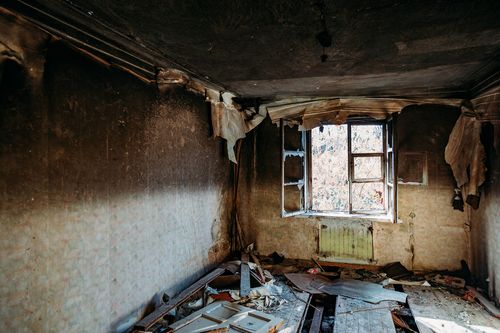
- An unattended death where decomposition has begun
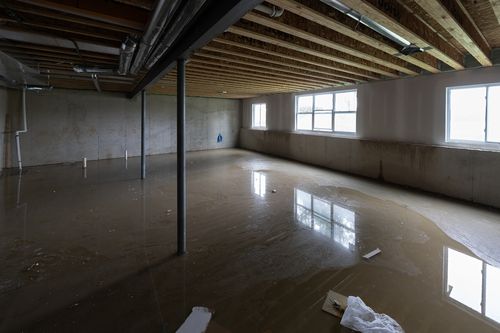
- Sewage or blackwater that backed up through a drain
- Heavy animal waste, rodent droppings or insect infestation
- Discarded needles, or residue from drug activity
Ordinary cleaners do not solve these. Household disinfectants are not rated to kill bloodborne pathogens such as HIV, Hepatitis B and Hepatitis C. Our article on why biohazard cleanup needs certified professionals goes deeper into the health side.
Five Moments That Mean You Should Stop and Call
After an Unattended Death
Fluids travel. They move through flooring, subfloor and sometimes into the joists below. What is visible on the surface is rarely the full extent.
After a Crime or a Serious Injury
Once police release the scene, the cleanup becomes the owner's responsibility. Officers and the medical examiner do not handle it.
When Fluids Have Soaked Into Flooring
Carpet, padding and subfloor act like a sponge. Surface cleaning leaves contamination underneath, and the odor returns in a week.
After Contamination in a Rental Property
This is the one most owners get wrong. The moment you direct an employee to clean it, different rules apply to you. More on that below.
When an Odor Will Not Leave
Smell is evidence. A persistent organic odor after cleaning usually means material was missed, not that the room needs more air freshener.
Why Michigan Follows MIOSHA, Not Federal OSHA
Michigan operates its own occupational safety plan. That means the governing rule for this work is MIOSHA Part 554, Bloodborne Infectious Diseases, rather than the federal standard applying directly. MIOSHA standards are administrative rules, and an administrative rule carries the effect of law.
Part 554 mirrors OSHA's bloodborne pathogens standard closely. It applies to all employers whose employees have occupational exposure to blood or other potentially infectious material. A compliant crew has to show several things.
- A written exposure control plan, reviewed and updated every year
- Universal precautions, meaning all blood is treated as infectious
- Employer-supplied gloves, eye protection, respirators and fluid-resistant gowns
- Regulated waste in closable, leak-resistant containers marked with the biohazard symbol
- Hepatitis B vaccination offered free to exposed staff
- Annual training, with records retained
This is not a formality. Federal regulators have confirmed the standard applies to contractors who clean up blood after accidents, not only to hospitals. If the company in your driveway cannot describe its exposure control plan, that is a real answer about how it works.
If You Own a Rental, a Shop or a Salon, This Is Different
Here is the distinction almost nobody explains. A homeowner cleaning their own home is not an employer. Part 554 does not reach them, though the health risk is identical.
A landlord, a store owner or a salon owner is in another position. Tell a maintenance worker or a staff member to clean up blood or sewage, and the picture changes. You have placed an employee in occupational exposure. The exposure control plan, the training and the PPE become your obligation, not the cleaner's.
For a Michigan business, bringing in a certified crew is usually the cheaper route. You are buying their compliance program rather than building your own.
Where the Waste Actually Goes
Contaminated material cannot go in the dumpster behind the building. Michigan regulates it under the Medical Waste Regulatory Act, Part 138 of the Public Health Code. Producing facilities register with the state and renew that registration every three years. They also keep site-specific management plans and train the people who handle the waste.
Biohazard cleanup when to call professionals in Michigan often comes down to this one practical fact. A homeowner has no lawful route to dispose of saturated carpet and drywall from a trauma scene. A registered company does.
Who Pays for It
Standard homeowners insurance frequently covers biohazard cleanup when the underlying event is a covered peril. A homicide, a break-in or an accidental injury usually qualifies.
Coverage commonly extends to:
- Professional disinfection, sanitization and odor removal
- Removing and replacing contaminated drywall, subfloor or framing
- Lawful disposal of biohazardous waste and ruined contents
- Additional living expenses if the property is temporarily uninhabitable
The gaps matter just as much:
- Unattended deaths and suicides vary by policy, and some require a rider
- Hoarding and gradual deterioration are denied under maintenance exclusions
- Sewage backup usually needs a separate endorsement
- Your deductible applies before anything else
Photograph everything before work starts. Then notify your insurer and ask for an adjuster. Pristine Clean documents the scene as we go, so the file matches what the adjuster needs.
Your First Few Hours
- Keep people and pets out of the affected area, and close interior doors.
- Do not run fans. Moving air can spread contamination through the building.
- Do not start cleaning before photographs are taken.
- If it is a crime scene, wait for release by law enforcement.
- Call a certified crew, then call your insurer.
Pristine Clean gets this call most often after someone has already tried. Our guide to the cleanup you cannot DIY covers the hazards of handling it yourself.
Frequently Asked Questions
1.Does homeowners insurance cover biohazard cleanup in Michigan?
2.Who pays for crime scene cleanup?
3.Can I clean a biohazard myself if it is small?
4.What certification should I look for?
5.How quickly should cleanup start?
Call Before Anyone Touches the Scene
The decisions made in the first hour shape the cost of everything after. Material that is photographed, contained and removed properly is a contained problem. Material that gets wiped down and left in place is a structural one.
Pristine Clean handles Biohazard Cleaning Services in Troy and the surrounding Oakland County communities. We work discreetly, with unmarked vehicles where that matters to you. We will tell you plainly whether a situation needs us. If it does not, we will say so.